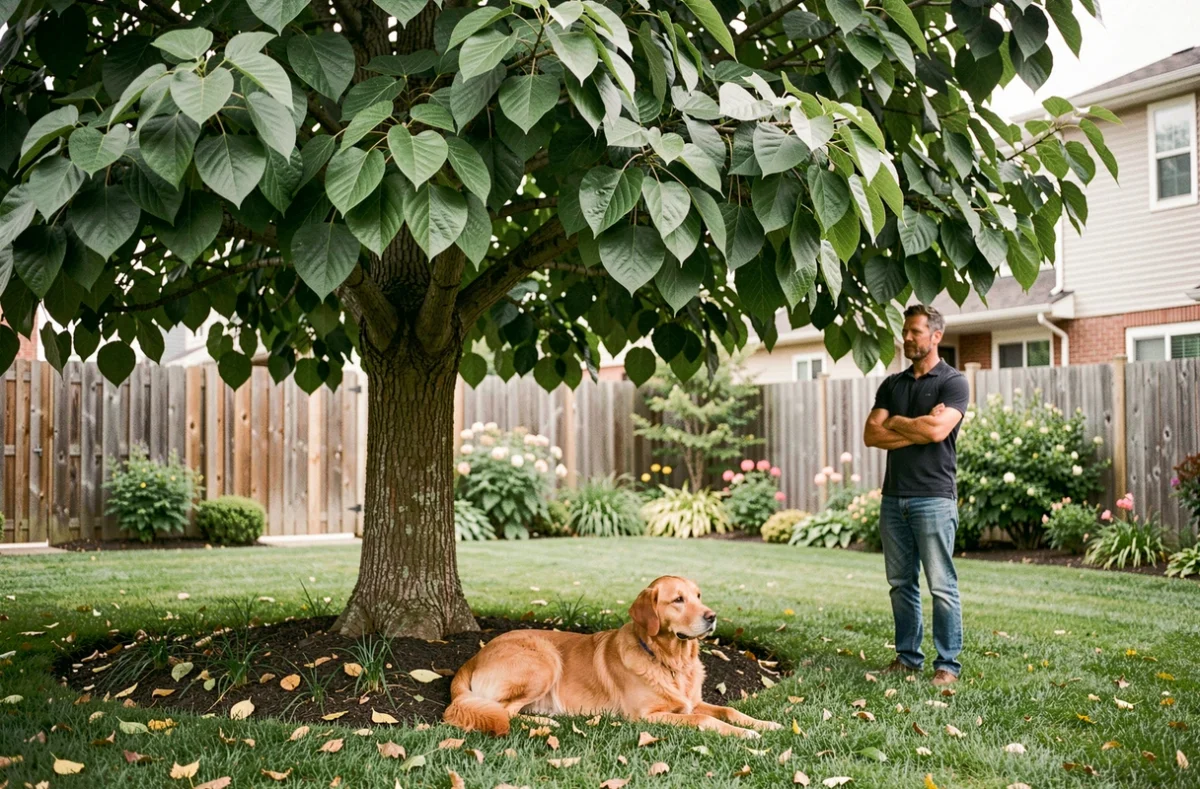
Catalpa does not appear on any official lists of plants toxic to dogs and cats published by leading veterinary poison control centers. This is worth stating clearly, as most online articles claim otherwise without citing a documented veterinary source.
The leaves, flowers and long pods of Catalpa bignonioides or Catalpa speciosa often worry pet owners, but the clinical picture is more nuanced than a simple verdict of “toxic” or “harmless.”
Catalpa and animal toxicity: what veterinary sources actually say
No published veterinary study documents a specific catalpa poisoning syndrome in dogs or cats. Lists of toxic plants published by leading veterinary poison control centers do not mention catalpa.
This does not mean that eating leaves or pods is harmless. An animal that chews a significant amount of plant material may develop nonspecific digestive problems, such as vomiting, diarrhea or excessive salivation. These signs indicate ordinary gastrointestinal irritation, not toxicity specific to the plant. An article detailing the effects of catalpa on pets explains the distinction between mechanical irritation and confirmed toxicity.
No evidence of toxicity is not proof of safety. Catalpa remains poorly studied from a veterinary toxicology perspective. Caution is warranted, but it should be based on facts, not assumptions drawn from the tree’s appearance or the size of its leaves.
Identifying catalpa: a necessary first step before assessing the risk
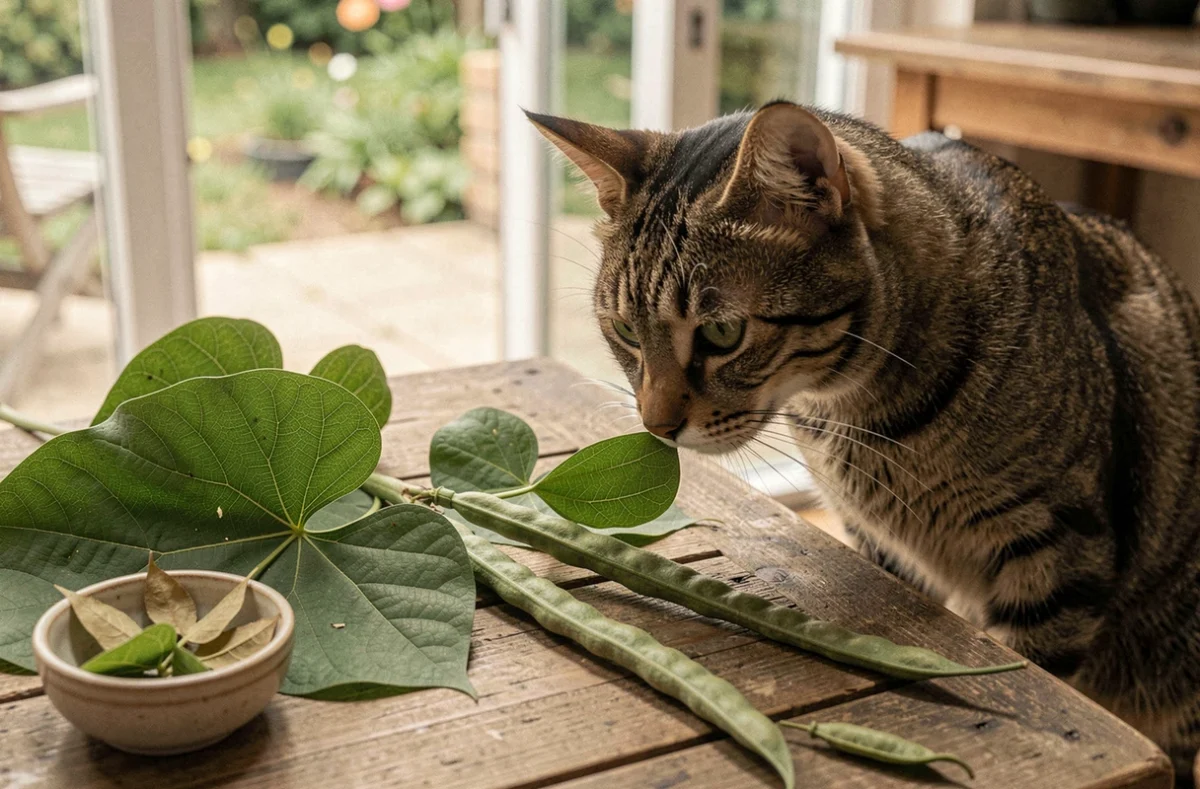
The name “catalpa” covers several species with similar characteristics. Catalpa bignonioides (southern catalpa) and Catalpa speciosa (northern catalpa) look alike enough that a single photo may not always be sufficient to tell them apart. The cultivar Catalpa bignonioides ‘Nana’ (dwarf catalpa) hardly ever flowers and therefore does not produce pods.
This distinction matters for two reasons. First, the part of the plant eaten (leaf, flower, pod or bark) affects the veterinary assessment. Second, misidentifying the tree can lead to a diagnosis involving a genuinely toxic plant, such as laburnum or black locust, whose pods superficially resemble those of catalpa.
We recommend sending your veterinarian clear photos of the leaves (upper and lower surfaces), any flowers, and the pods. These details can help confirm the species and rule out a genuinely dangerous tree.
Do not confuse catalpa with trees that have toxic pods
Several ornamental trees with long pods are indeed toxic. Laburnum (Laburnum) and black locust (Robinia pseudoacacia) appear on lists of plants that are dangerous to pets, unlike catalpa.
A gardener who misidentifies a tree may either panic unnecessarily over a catalpa or underestimate the danger posed by laburnum. Accurate species identification is the first useful step.
Symptoms after eating catalpa: when to contact a veterinarian
Signs observed after a dog or cat chews catalpa are generally mild, temporary digestive problems. They are no different from those caused by eating any unfamiliar plant material.
Signs to watch for:
- Vomiting within a few hours of ingestion, often with visible plant fragments
- Mild diarrhea, sometimes accompanied by mucus
- Excessive salivation (drooling), especially in cats, which tend to chew leaves for longer
- Temporary lethargy, usually resolving within a few hours
These symptoms are not specific to catalpa. They can occur after an animal eats an unusual amount of many nontoxic plants. Neurological problems, tremors or respiratory distress would point more toward confusion with a genuinely toxic plant and warrant immediate veterinary attention.
What to do if ingestion is suspected
The appropriate response does not depend on whether symptoms appear. As soon as ingestion is suspected:
- Note the approximate time and which part of the plant was involved (leaf, flower, pod or bark)
- Keep a sample of the plant or take a clear photo, if you can do so safely
- Contact your veterinarian and describe the situation before deciding whether to bring your pet in
- Do not induce vomiting or give any home remedies (milk, charcoal or oil) unless your veterinarian explicitly instructs you to
A veterinarian can assess the amount eaten in relation to your pet’s weight and decide whether monitoring at home is sufficient or a clinical examination is needed.

Garden precautions to limit contact between pets and catalpa
Since the main concern is not proven toxicity but digestive irritation from eating too much plant material, preventive measures call for common-sense gardening rather than fencing off the tree.
Regularly clearing fallen leaves and flowers from areas where your pet roams freely reduces the chance of chewing. Southern catalpa produces a large amount of plant debris from late summer through fall.
Dwarf catalpa (Catalpa bignonioides ‘Nana’), which produces neither flowers nor pods, naturally limits the plant material accessible on the ground. This cultivar is a practical choice for a small garden used by pets.
Simply observing your pet’s behavior is often enough to determine how cautious you need to be. A dog that consistently ignores the tree does not require the same precautions as a puppy that chews everything it finds. Young animals and those prone to pica (eating non-food items) should be watched more closely around all plants, whether catalpa or otherwise.
Catalpa remains a popular ornamental tree, valued for its dense shade and rapid growth. Given current veterinary knowledge, removing it from a garden out of concern for pets is based on an unsupported fear. Correctly identifying the tree, keeping an eye on your pet and knowing what to do if ingestion occurs are the three steps that are genuinely useful.