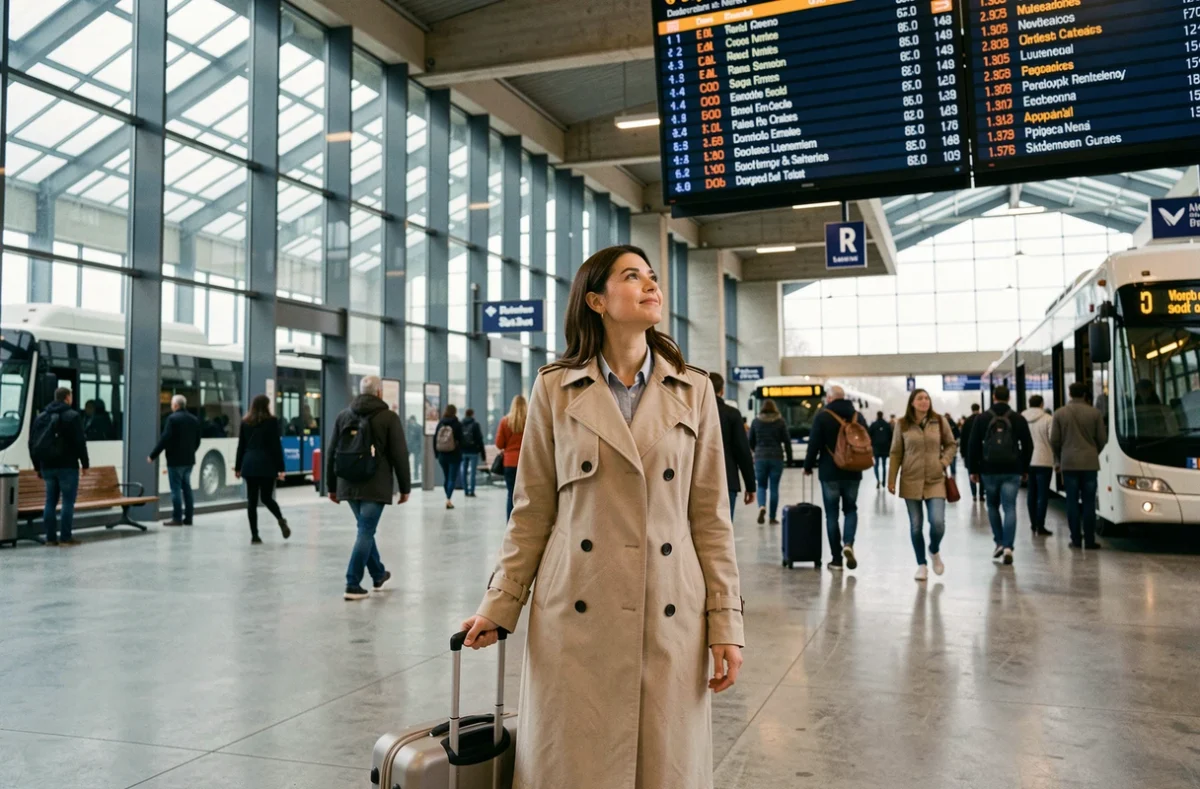
The long-distance bus connects most major French and European cities today on regular routes, with daily departures and fares often much lower than those of trains or planes. This mode of transport, which has developed significantly since the market was liberalized in France, now covers hundreds of destinations accessible without mandatory advance booking or complex formalities.
Long-Distance Bus Network: What the European Map Actually Covers
Companies like FlixBus, BlaBlaCar Bus, and the services offered via SNCF Connect serve a dense network that goes well beyond the capitals. From Paris, several hundred European cities are accessible directly or with just one connection. Lyon, Marseille, and Lille also serve as secondary hubs to Spain, Italy, Germany, the Benelux, or Central Europe.
What distinguishes the bus network from the train network is its ability to connect medium-sized cities poorly served by rail. In the Balkans, inland Spain, or certain regions of Eastern Europe, the bus sometimes remains the only regular public transport between two urban areas.
To identify available connections from a specific city, online comparison tools and operator websites offer interactive maps. Just select the departure point to display all direct destinations, allowing you to spot routes you might not have considered. You can also learn more about Voyagenbus to explore available routes in France and Europe.
Bus Fares versus Train and Plane: Where the Real Savings Lie
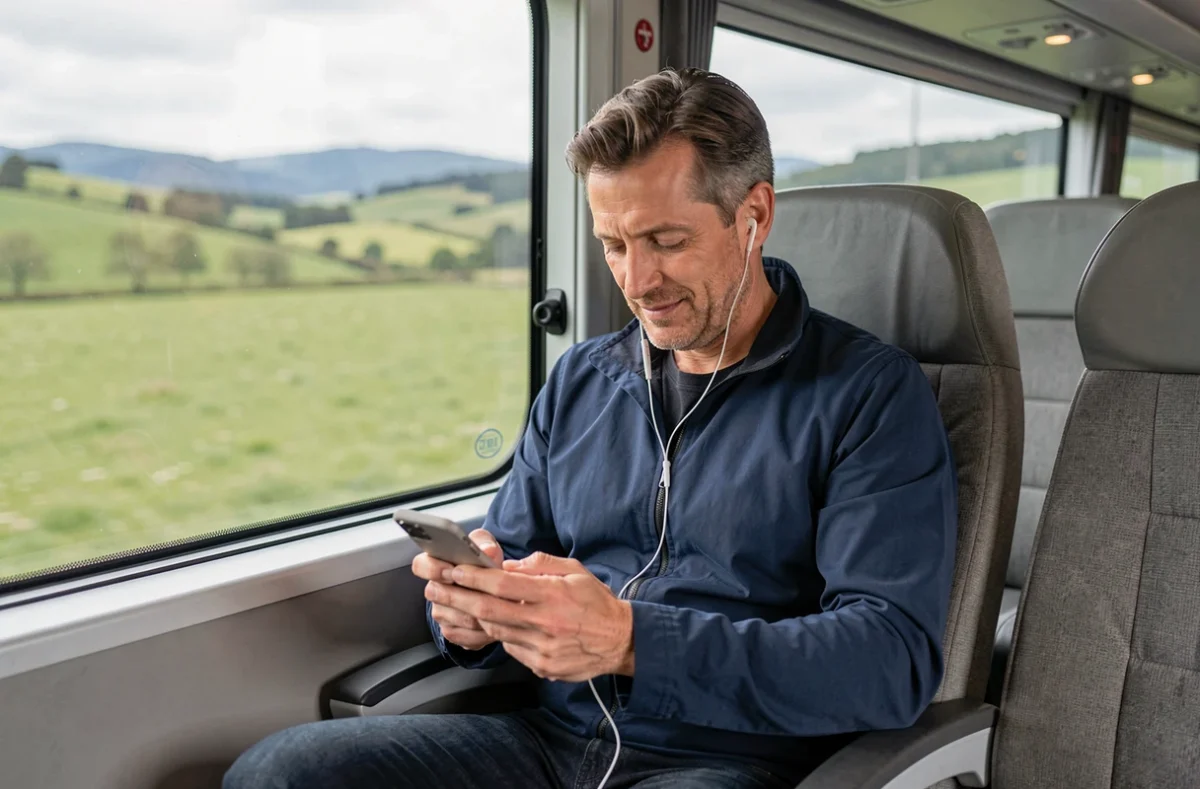
Price remains the primary argument for long-distance buses. On a domestic route in France, a bus ticket often costs two to three times less than a train ticket for the same route. The trade-off is a longer travel time, sometimes double.
This equation changes depending on the context. On certain European routes (Paris-Brussels, Lyon-Milan, Barcelona-Montpellier), the price gap with high-speed trains is significant, while the difference in duration remains reasonable. However, on distances exceeding ten hours of travel, fatigue and lost time diminish the real financial advantage.
When Night Buses Change the Calculation
Night journeys allow you to save on accommodation while progressing towards your destination. The seats are reclinable, though not reaching the comfort of a train sleeper. For travelers able to sleep in a semi-reclined position, the night bus combines transport and accommodation savings.
The night bus is particularly justified on medium distances (six to nine hours), allowing for early morning arrivals without having spent a full sleepless night.
Passenger Rights on Buses: The European Framework Few Travelers Know
The European regulation on passenger rights in coaches provides specific protections, but they do not apply to all journeys. Here are the situations covered for regular services of at least 250 km:
- Cancellation or delay of more than two hours at departure: the carrier must offer the choice between rerouting at no cost and a full refund of the ticket. If this choice is not offered, additional compensation may be due.
- For a journey scheduled to last more than three hours, a delay or cancellation exceeding 90 minutes entitles passengers to refreshments and, if necessary, accommodation (within certain limits).
- Reservations and tickets cannot be refused solely on the grounds of a disability or reduced mobility. The regulation governs assistance and accessibility for these travelers.
These protections have significant limitations. They do not cover short routes or occasional services. Checking the distance of the service before asserting a right helps avoid disappointments.
Missed Connections: A Common Blind Spot
A connection is not automatically protected just because it appears in an itinerary found online. If two separate tickets have been purchased separately, the second carrier has no obligation in case of a delay from the first. To limit this risk, it is advisable to choose a single ticket covering the entire journey or to allow sufficient time between the two segments.

Comfort and Amenities Onboard: What Varies from Operator to Operator
Most long-distance coaches offer Wi-Fi, power outlets, and restrooms. These basic amenities have become standard on main routes in France and Western Europe.
The differences lie elsewhere. The spacing between seats varies by operator and sometimes by the vehicle assigned to the route. Some offer additional legroom for a fee. Air conditioning, reliable in summer, can make the journey uncomfortable if poorly adjusted (bringing an extra layer remains a useful reflex).
On routes in Eastern Europe or the Balkans, local companies offer a more variable level of equipment. Comfort depends as much on the company as on the chosen route. Checking recent reviews on a specific journey provides a more reliable picture than the general reputation of the operator.
Environmental Impact of Long-Distance Buses
The bus is the second most environmentally friendly mode of public transport in terms of CO2 emissions, just after the train. Per passenger transported, it emits significantly less than individual cars and incomparably less than planes over equivalent distances.
For travelers looking to reduce their carbon footprint without sacrificing mobility, the bus represents a compromise between cost, accessibility, and energy efficiency. On routes where the train is absent or too expensive, it often constitutes the only realistic collective alternative.
The long-distance bus network in France and Europe continues to expand, with new regular routes added each year. The main limitation remains travel time, which requires accepting a slower pace of travel. For destinations accessible in less than eight hours, the ratio between the price paid and the time invested generally remains favorable to the bus.