Béatrice Vonderweidt remains one of the most challenging figures to document visually in the French art landscape. No verified birth date circulates in public sources, and the photos available online are almost never dated or contextualized. It is precisely this absence of temporal markers that makes the analysis of her journey through images as technical as it is unusual.
Dating Béatrice Vonderweidt’s Photos Through Stylistic Analysis
Without a confirmed birth date or official timeline, the only reliable lever to reconstruct Béatrice Vonderweidt’s visual evolution is through the analysis of clothing and photographic codes present in the images. The pictures associated with her modeling period bear specific markers: studio lighting with hard shadows, graphic makeup, structured shoulder garments. These elements refer to the aesthetic conventions of the 1970s and 1980s.
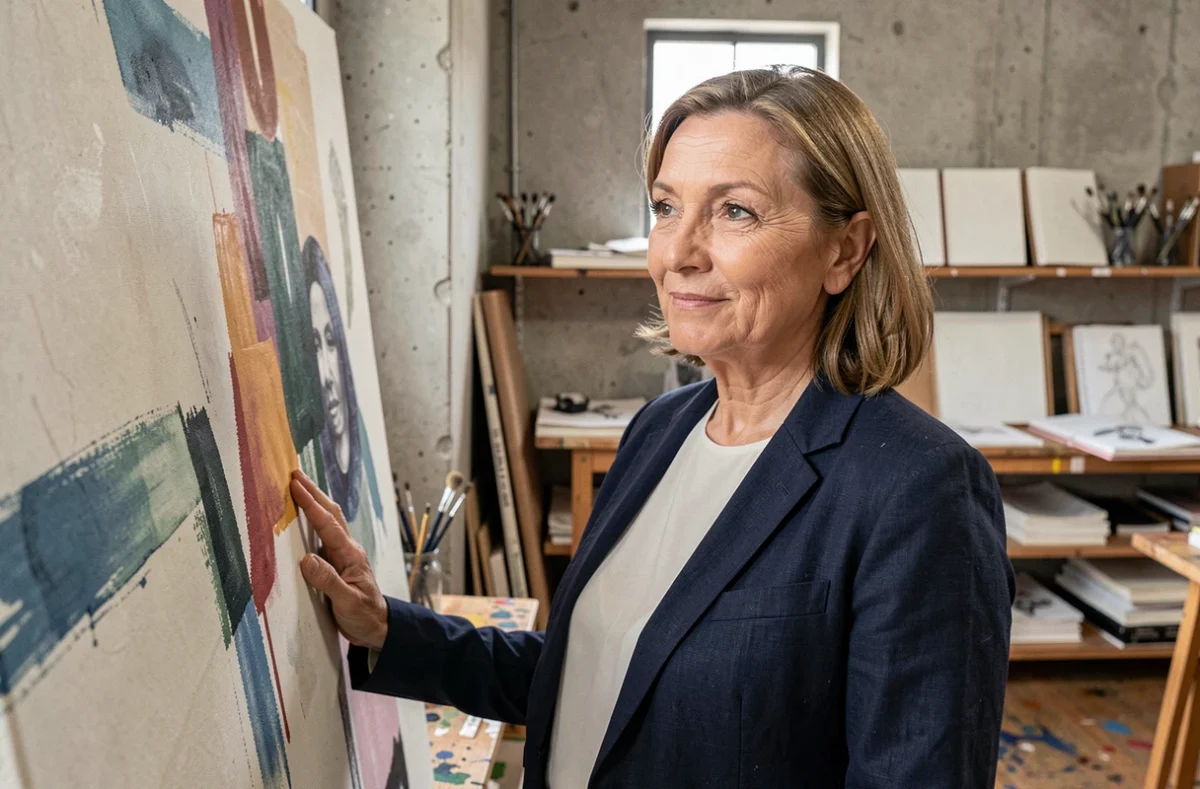
More recent portraits, sparsely shared on social media, adopt a radically different style. Natural light, less posed framing, absence of visible artistic direction. This stylistic shift is not coincidental: it reflects the transition from a constructed image for modeling to a more spontaneous photographic presence, consistent with a painter’s activity.
We observe that tracing Béatrice Vonderweidt’s age in photos involves cross-referencing these visual clues with the fashion trends of each era. It is an exercise in indirect dating, comparable to what fashion archivists do with unlabeled portfolios.
Modeling and Painting: Two Incompatible Image Regimes
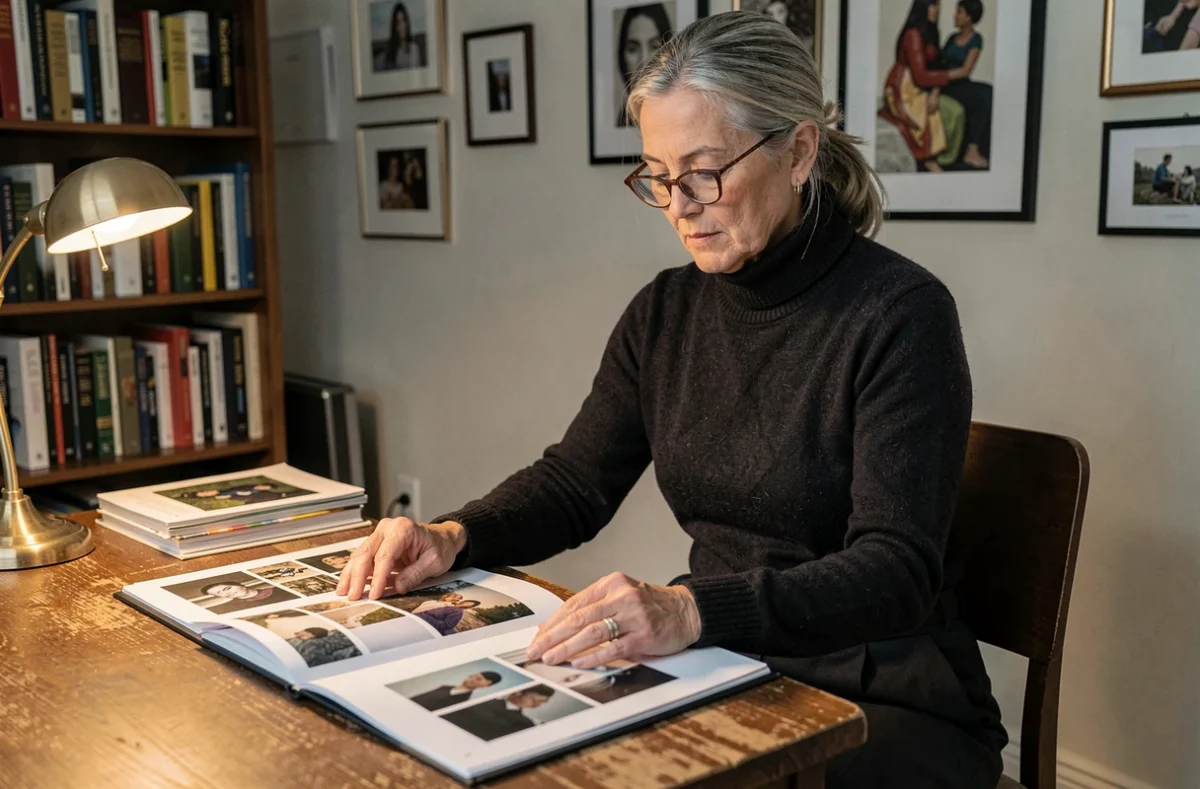
Béatrice Vonderweidt’s journey illustrates a well-identified phenomenon in the art world: the transition from being a photographed subject to that of a visual creator profoundly alters the relationship to public image. A model produces images for others. A painter produces works signed in her name.
This shift largely explains the scarcity of recent photos. Modeling inherently generates a high volume of images, archived in portfolios, published in magazines. Painting, on the other hand, requires no physical exposure of the artist. The body disappears in favor of the canvas.
Why Modeling Photos Dominate Search Results
Search engines prioritize indexing content that is already referenced and shared. Images from modeling, even old ones, benefit from a distribution history that photos related to painting do not have. Béatrice Vonderweidt does not maintain a personal website or an online portfolio. Her Pinterest profile, under the name Beatrice Goldnadel Vonderweidt, contains thematic boards (crafts, crochet, children’s inspirations), but no gallery of her own pictorial works.
This asymmetry creates a documentary bias. Anyone searching for photos of Béatrice Vonderweidt encounters visual fragments related to styling and fashion, not her work as a painter. The most recent artistic journey remains the least visible.
Use of Online Photos: Lifestyle vs. Actual Artistic Journey
A phenomenon documented by several sources deserves mention: the majority of online uses of Béatrice Vonderweidt’s photos have no connection to her work as a painter. These images are repurposed in lifestyle, fashion, or general content, without context or credit.
This misappropriation of the image poses a readability problem for anyone trying to reconstruct a coherent journey. The most circulated content does not document an artistic evolution: it recycles an image of a model in decorative contexts.
Criteria for Distinguishing a Documentary Photo from a Generic Use
- The presence of a photographer’s credit or a publication mention (magazine, catalog) indicates a period modeling photo, thus usable for dating.
- An informal framing without artistic direction, often associated with an exhibition or studio context, suggests a period after modeling.
- The complete absence of context (no caption, no source, cropped image) signals a lifestyle use or aggregated content without documentary value.
Béatrice Vonderweidt: Discretion and Right to Image Online
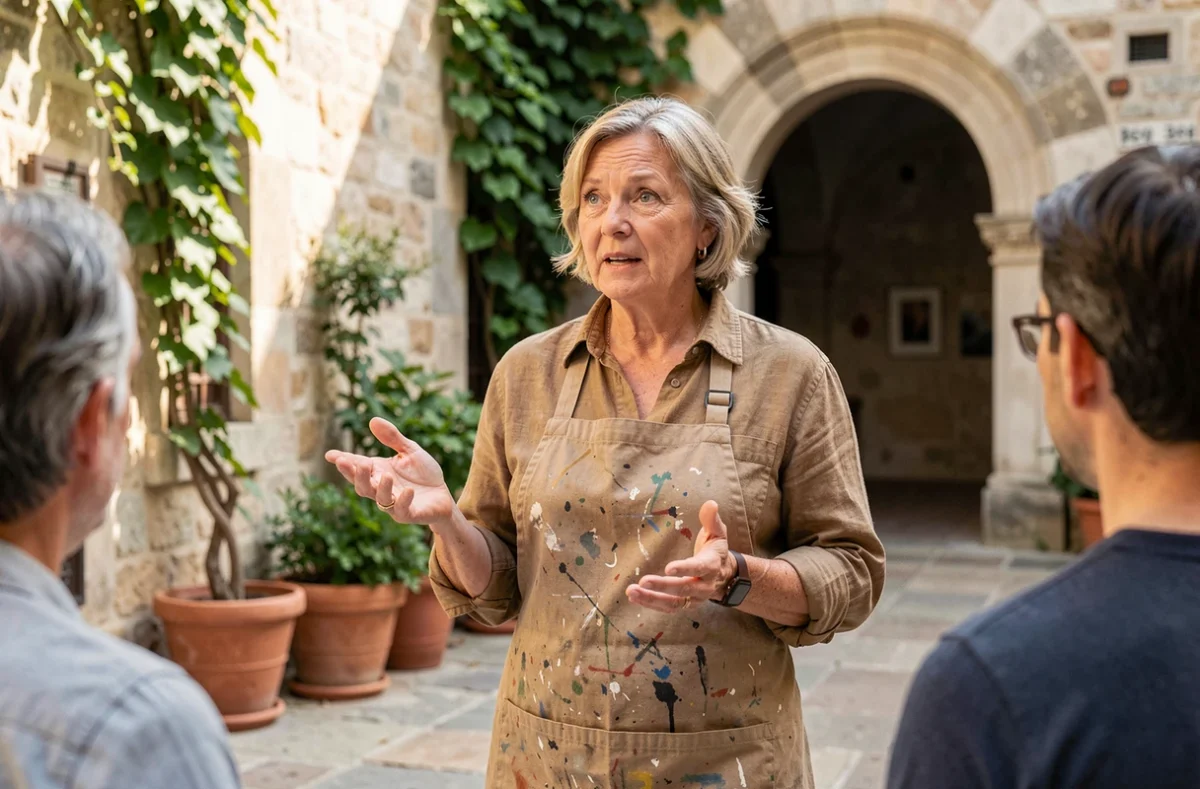
Béatrice Vonderweidt has never fostered an autonomous media presence. The available information comes exclusively from third parties: articles dedicated to Gilles-William Goldnadel, Facebook posts from Magazine-economie, genealogy sheets on Geneanet. This situation places all her iconography in a precise legal zone.
Under French law, the republication of images without explicit consent constitutes a potential infringement of the right to one’s image, even when the photos were initially published in a professional context. The fact that a person was a model does not create a perpetual right to disseminate her images outside their original context.
This legal constraint also explains why no structured gallery exists online. Websites mentioning Béatrice Vonderweidt limit themselves to textual descriptions or unattributed images, never constituting a reliable visual corpus.
What the Absence of Official Photos Reveals
The absence of a public portfolio is not a communication flaw. We read it as a choice consistent with her withdrawal from modeling. Béatrice Vonderweidt has left a profession based on physical exposure for a discipline where the artist can remain invisible behind her work. Photographic discretion is an integral part of this professional requalification.
Online searches regarding her age and photos will likely continue to stumble upon this paradox: the visually best-documented period (modeling) is the one she has left, while the active period (painting) remains deliberately off-screen. Any attempt at visual reconstruction must integrate this data, lest it produce a narrative that corresponds to nothing more than the curiosity of the search engine.