
The presence of blood in a dog’s stool indicates a mucosal lesion somewhere in the digestive tract. Before considering the causes, we recommend precisely characterizing the bleeding: its color, its temporal relationship with defecation, and associated signs determine the likely location and degree of urgency.
Blood in a dog’s stool after exercise: an underdiagnosed syndrome
Post-exercise hemorrhagic diarrhea in athletic dogs constitutes a distinct clinical picture, still poorly understood by owners. What is called “exercise poop” combines soft stools and bright red blood after a run or intense training.
The mechanism relies on three combined factors: the physiological stress of exercise diverts blood flow to the muscles at the expense of the colonic mucosa, a diet that is too rich or poorly distributed before exercise exacerbates irritation, and hypermotility of the colon accelerates transit to the point of causing superficial lesions.
This syndrome is not strictly an emergency, but its recurrence should raise concern. A dog that bleeds regularly after exercise has a weakened colonic mucosa. We observe that the first reflex to adopt is to know what to do if my dog has blood in its stool to distinguish this picture from a more serious pathology.
Adjustment involves meal fractionation (no complete ration in the hours before exercise), choosing a highly digestible food, and a gradual increase in intensity during training.
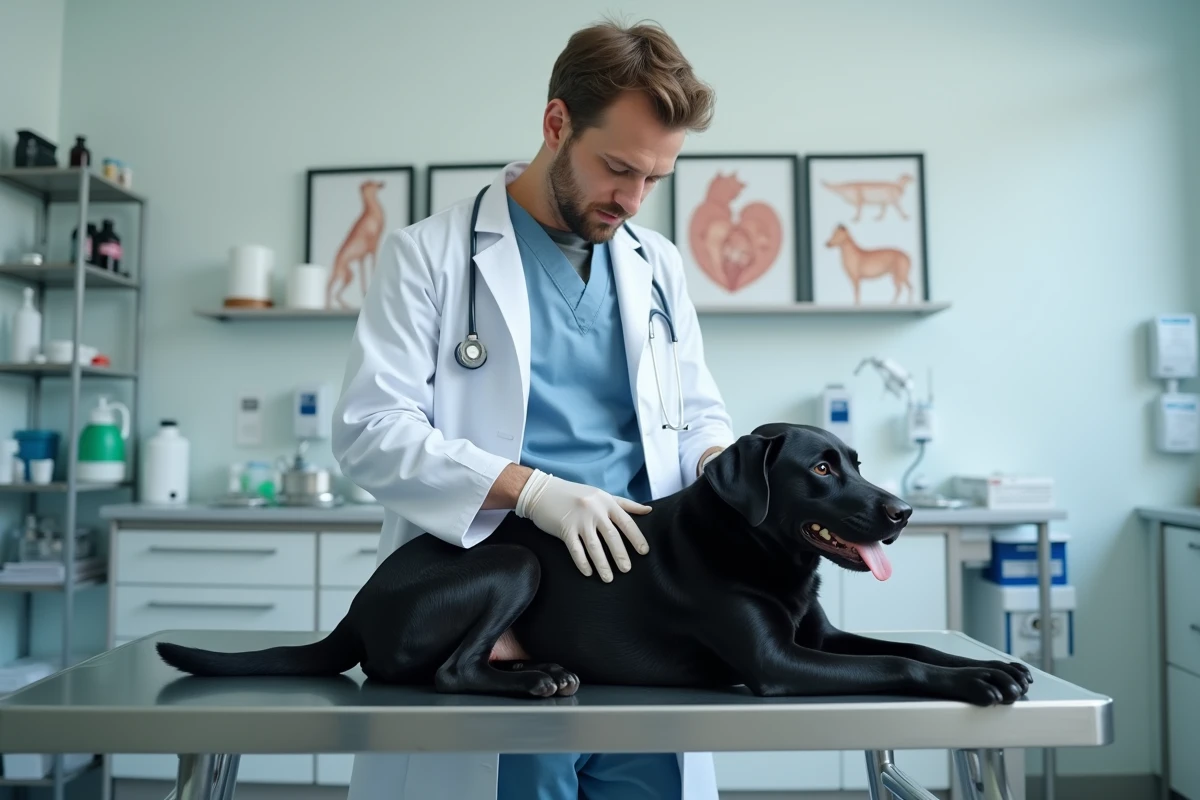
Hematochezia or melena: locating the dog’s digestive bleeding
The distinction between hematochezia and melena is not just a vocabulary point. It directly guides the differential diagnosis and the course of action.
Hematochezia: bright red blood from a low source
Bright red, fresh blood deposited on the surface of the stool or mixed with diarrhea indicates a bleeding from the colon, rectum, or anal area. The most common causes include colitis (infectious, parasitic, or stress-related), rectal polyps, and traumatic lesions from ingested foreign bodies.
Isolated hematochezia, without alteration of the general condition, allows for monitoring over a few hours in a healthy adult dog. However, if it is accompanied by profuse diarrhea, vomiting, or lethargy, consultation should not wait.
Melena: black stools and digested blood
Black, tarry, and foul-smelling stools indicate a high digestive bleeding (stomach, duodenum, esophagus). The blood has been degraded by gastric enzymes before being expelled. Melena often goes unnoticed because the color can be confused with that of a diet rich in iron or offal.
Melena is a more serious warning sign than hematochezia. It may indicate a gastroduodenal ulcer, NSAID poisoning, or a coagulopathy. We recommend a prompt consultation in all cases of confirmed melena.
Common causes of digestive bleeding in dogs
The etiologies fall into broad categories, the severity of which varies significantly.
- Intestinal parasites (hookworms, whipworms, giardia): they cause chronic inflammation of the mucosa and micro-bleeding. A parasitic coprogram quickly guides treatment.
- Viral or bacterial gastroenteritis: parvovirus remains the most feared in unvaccinated puppies, with severe hemorrhagic diarrhea and rapid dehydration.
- Food intolerances and allergies: they generate chronic colitis with intermittent presence of blood and mucus in the stool.
- Digestive foreign bodies: bones, toys, ingested fabrics can lacerate the mucosa. In case of suspected intestinal obstruction with repeated vomiting and painful abdomen, never attempt to induce vomiting in the animal or administer a laxative, as this may worsen a perforation.
- Digestive tumors: intestinal lymphoma, colorectal adenocarcinoma. More common in older dogs, they often manifest as chronic bleeding and progressive weight loss.

When to consult a veterinarian urgently for blood in the stool
Any bloody diarrhea in a puppy, an elderly dog, or an immunocompromised animal should be treated as an emergency. These patients dehydrate and decompensate much faster than a healthy adult.
In a healthy adult without a history, we consider urgent consultation as soon as at least one of these criteria is met:
- Bloody diarrhea persisting for more than a few hours
- Simultaneous presence of vomiting, fever, or marked lethargy
- Suspicion of ingestion of a foreign body or toxic substance
- Melena (black stools) regardless of the quantity
A useful reflex before the consultation: note the frequency, color, and consistency of the stools, the duration of the episode, and associated symptoms. Photographing the stools allows the veterinarian to assess the type of bleeding even if the episode has ceased by the time of the examination.
A single episode of a few drops of bright red blood on formed stools, in a vaccinated and dewormed adult dog, without other symptoms, may be subject to simple close monitoring throughout the day. If the bleeding recurs or the general condition worsens, consultation is necessary without waiting for the next day.